
Most panels don't need replacing. Some absolutely do.
Panel upgrades and breaker box replacement in Rome, GA
A panel replacement is one of the bigger tickets in residential electrical work, and homeowners know it, which is why the fear of being sold one runs so deep. Here is the view from inside the panel: most breaker boxes are doing their job and will keep doing it for years. A smaller number genuinely need to go, either because the house has outgrown the service feeding it or because the panel is one of the brands, Federal Pacific and Zinsco chiefly, with a documented record of breakers that fail to trip. The whole value of this service is knowing which situation you're in before any money moves. When we open a panel, the question being answered is whether every breaker in it can still be trusted to cut power before a wire overheats. If yours can, you'll hear exactly that.
Signs a panel really does need to go
- A Federal Pacific (Stab-Lok) or Zinsco label on the panel, both replaced on the name alone because of documented failure records
- Breakers that trip over and over, won't reset firmly, or a panel that is warm, buzzing, or smells hot
- Rust, corrosion, or scorch marks inside the box, which means water or heat has been where neither belongs
- A fuse box, or a panel out of open slots with double-tapped breakers making up the difference
- 100-amp service in a house that has since gained central air, an electric range or dryer, or a shop full of tools
- An EV charger, hot tub, or detached building on the way, or an insurance carrier asking questions about the panel before renewing
From verdict to replacement day
-
The verdict comes before anything else
Some panel calls end with us closing the door and telling the homeowner it's fine. Age by itself doesn't condemn a panel. What condemns one is heat damage, corrosion, a hazard-brand label, or a house pulling loads the service was never sized for. We look for those specifically, show you what we find on your own equipment, and give the verdict before a quote exists.
-
Load math decides the size, not a sales script
Whether you need 100, 150, or 200 amps is arithmetic: a load calculation built from what your house actually runs. Heat and air, water heater, range, dryer, and anything on the way like an EV charger or a hot tub all go into it. Gas-appliance houses often live comfortably on 100 amps. All-electric houses adding a charger usually can't. We run the numbers and show them to you, because a service upgrade justified by math beats one justified by adjectives.
-
Grounding and code come along for the ride
A replacement panel has to meet today's code, not the code of the year the house was built. That usually means bringing grounding and bonding up to current standards and using AFCI and GFCI breakers where code now requires them. None of that should appear as a surprise on an invoice, so it gets explained up front as part of the scope.
-
Replacement day is coordinated and inspected
Panel and service work is permitted, and on service upgrades the power company has to disconnect and reconnect at the meter, so the day gets scheduled and the outage window told to you in advance. Every circuit is relanded on a correctly sized breaker, torqued, tested, and labeled so the legend on the door actually matches the house. Then the inspector checks the work, which is a feature: a second set of licensed eyes on the one piece of equipment everything else depends on.
Why panel quotes vary so much
Two jobs both called a panel replacement can be very different amounts of work, and these are the things that separate them.
- A like-for-like panel swap versus a full service upgrade, which replaces the meter base, service entrance cable, and mast along with the panel
- The amperage of the new service, though most of the cost is labor and gear that a bigger panel barely changes
- The condition of the grounding system, since rods and bonding usually need to come up to current code
- How many circuits land in the panel and what shape they're in, because double taps and undersized wires get corrected, not copied over
- Whether a subpanel for a garage, shop, or hot tub is part of the job, and how far that feeder has to run
Two photos, the panel with the door open and the meter outside, are usually enough for us to tell you which kind of job you're looking at.
Where we stop, and why
Panel and service work sits at the top of the licensed trade for a reason: everything in the house is downstream of it, and mistakes here don't announce themselves until the day they matter. This work is done under the owner's Georgia electrical license, permitted and inspected, every time. The drywall patch or paint touch-up that sometimes follows a panel relocation is a different trade, and our sister company Journey Home Services handles it.
What replacement day looks like
The outage window agreed in advance, since the whole house is off for most of a replacement day
The power company coordinated for the disconnect and reconnect when the service is being upgraded
The old panel out, the new one set, and every circuit relanded, torqued, and tested one at a time
A written legend on the door that matches reality, so the right breaker is findable at midnight
The permit inspection scheduled and met, and the work area left clean
Panel Upgrades & Breaker Box Replacement questions
Do I actually need a new panel?
Maybe not, and we'll say so when that's the answer. Age by itself doesn't condemn a panel: a thirty-year-old box from a reputable maker, clean inside, with capacity for the house it feeds, can keep doing its job. The honest reasons to replace are specific. A Federal Pacific or Zinsco label. Heat damage or corrosion inside. Breakers that trip constantly, or have quietly stopped tripping at all. No capacity left for what the house now runs, or an insurer that won't renew around it. If none of those apply to yours, we'll tell you that and leave it alone.
What's actually wrong with Federal Pacific and Zinsco panels?
They fail quiet. Independent testing of Federal Pacific Stab-Lok breakers found failure-to-trip rates far beyond what any breaker should have, which means an overloaded circuit can sit there heating the wiring with nothing cutting it off. Zinsco panels have a bus bar design prone to corrosion, and their breakers can seize to it, arc, or keep passing current even when switched off. Both look perfectly normal on the wall for decades, because the flaw only shows on the day the breaker is needed. That's why these two get named for replacement outright while every other brand gets judged on its condition. Plenty of houses in Rome and the surrounding towns date from the decades these panels were sold, so finding one here is not rare.
Is 100-amp service enough, or do I need 200?
It depends entirely on what the house runs, and there's real math for it, a load calculation, rather than a rule of thumb. A modest house with gas heat, gas water, and a gas range can live on 100 amps with room to spare, and replacing a tired 100-amp panel like for like is a legitimate job. Stack electric heat and air, an electric range and dryer, then add an EV charger, and 100 amps runs out on paper before anything flickers in the wall. When a full service upgrade is happening anyway, 200 amps is the sensible default, because most of the cost is the labor of replacing the service, and the difference between panel sizes is small next to doing the job twice.
Can I add a subpanel instead of upgrading the whole service?
Often, and when it works it's usually the cheaper right answer. A subpanel adds breaker space and puts power where you need it: a garage, a shop, or beside a hot tub. What it can't add is capacity, because every subpanel still draws through the main service. So the load calculation decides. If your service has headroom, a subpanel carries the new load and the main panel stays. If the service is already near its limit, a subpanel just moves the crowding around, and the honest answer is the upgrade.
How long will my power be off?
Plan around losing power for most of a working day on a straightforward replacement. The whole house has to come off for the panel to come out, and on service upgrades the power company disconnects and reconnects at the meter, so part of the schedule belongs to them. You'll know the day and the rough window in advance. A full freezer left shut will ride out a day fine. The fridge side is good for a few hours at most, so if something in there matters, set up a cooler before we arrive.
Is a permit really required to replace a breaker box in Rome?
Yes. Georgia licenses electrical work at every job size, and panel and service work is permitted and inspected through the local building department. The inspection works in your favor: a second licensed set of eyes on the equipment your whole house depends on, and a paper trail that matters later, at sale time and to your insurer. An unpermitted panel swap can surface years down the road in a home inspection with your name attached to the problem. We pull the permit, meet the inspector, and hand you the record.
Where we do this work
Panel Upgrades & Breaker Box Replacement across Rome, Floyd County and the towns around them in Northwest Georgia, including 6 distinct parts of Rome, from Between the Rivers to the newest streets off US 27.That is Floyd, Polk, Gordon and Bartow counties, and the towns listed below.
Town by town, that means Acworth, Adairsville, Aragon, Armuchee, Braswell, Buchanan, Calhoun, Cartersville, Cave Spring, Cedartown, Coosa, Dallas, Emerson, Euharlee, Fairmount, Hiram, Kingston, LaFayette, Lindale, Lyerly, Menlo, Plainville, Ranger, Resaca, Rockmart, Rome, Shannon, Summerville, Taylorsville, Trion and White. Each has a page on what its houses actually need, and smaller places in those counties are covered too. The full picture.
Recent work
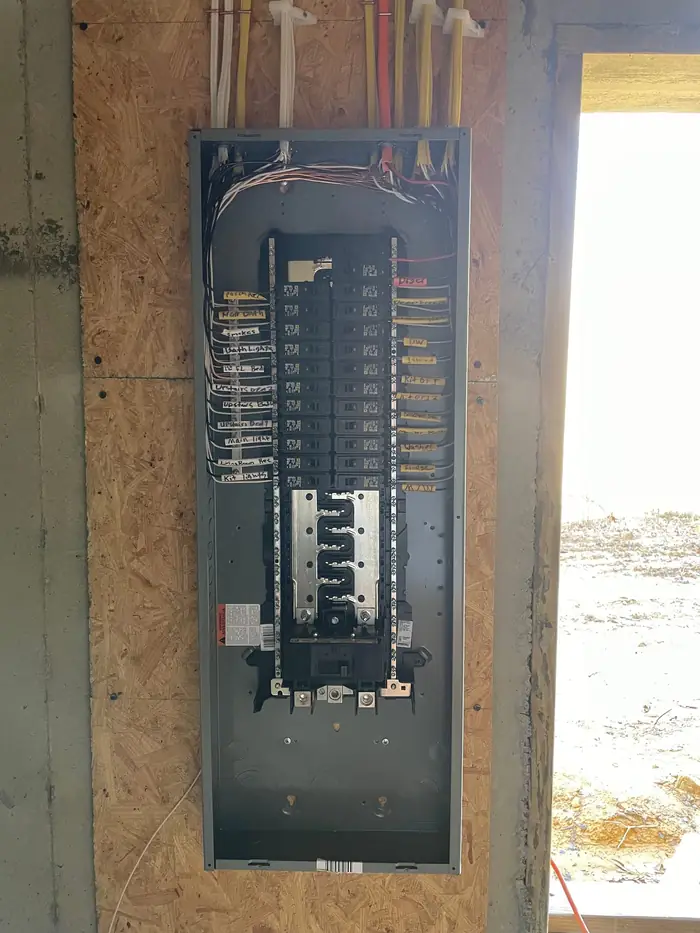
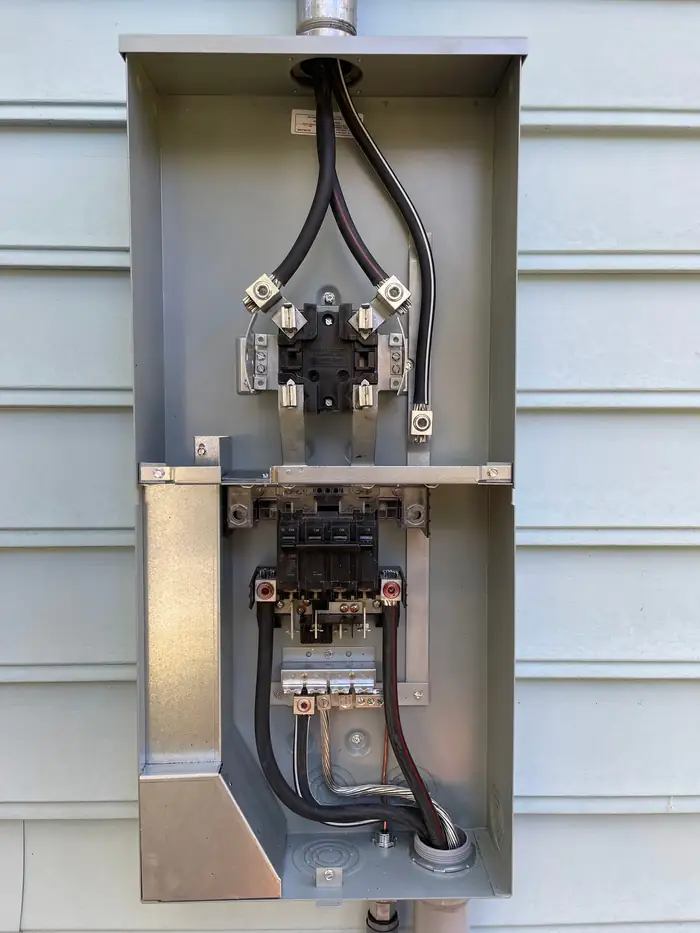
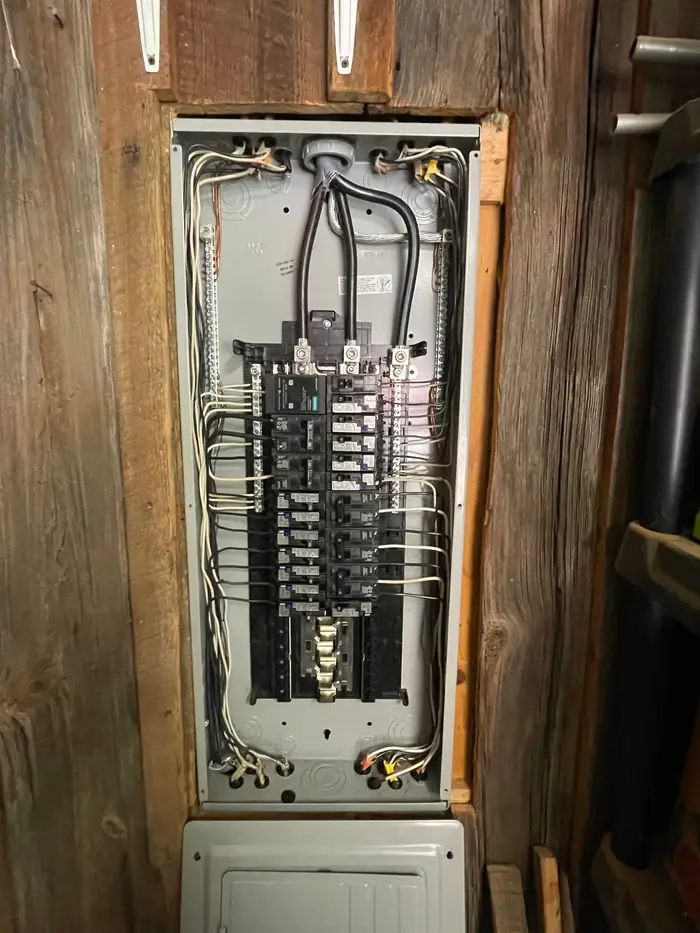
Panels we have finished
Our own photographs, taken on the job.
Often booked together
Related work
These come up alongside panels often enough to be worth mentioning when you call.
Electrical Repair & Troubleshooting
Dead outlets, GFCI trips, flickering lights and half-dead circuits, traced to the cause instead of guessed at.
What's involvedGenerator Installation
Standby systems sized by real load, and the inlet and interlock that make a portable generator legal.
What's involvedEV Charger Installation
Level 2 charging circuits sized to what your panel can actually carry, permitted and inspected.
What's involvedNeed panels in Rome?
Tell us the brand on the panel label if you can read it, and send a photo of the panel with the door open. That's usually enough to know whether you're looking at a repair, a replacement, or nothing at all.