
The fault is rarely where the symptom shows up
Electrical repair and troubleshooting in Rome, GA
Most repair calls start the same way: something in the house stopped working, or started acting strange, and there is no obvious reason why. An outlet goes dead while the breaker stays on. A GFCI trips every few days. Lights flicker in one room and nowhere else. The tempting fix is to replace the part where the symptom shows up, and sometimes that even works. More often the real failure sits one or two boxes upstream, the new part inherits the same problem, and the symptom comes back with a parts bill attached. Troubleshooting is the actual skill in this trade: reading the symptom, knowing how houses of a given age were wired, and testing until the cause is in hand. Once it is, the repair itself is usually the quick part of the visit.
Symptoms worth a call
- An outlet, or a whole run of them, goes dead while the breaker stays on
- A GFCI that trips over and over, or will not reset at all
- Flickering or dimming lights, whether it is one fixture, one room, or the whole house
- Half of a room working while the other half is dead, which points at a failed connection mid-circuit
- A breaker that keeps tripping, especially the same one at the same times of day
- A warm outlet or switch plate, a buzzing device, or any scorch mark, which is a call to make promptly
- Extension cords doing permanent duty because a room never had enough outlets
How a fault gets found
-
The questions come before the tools
When it started, whether anything changed around the same time, what else is running when it happens, whether it is constant or comes and goes. That history usually cuts a whole-house search down to one circuit before a single cover plate comes off. Intermittent faults especially get found by pattern, and the homeowner who has lived with the symptom knows the pattern better than any meter does.
-
Testing, not part-swapping
The circuit gets traced and tested until the cause is in hand: at the panel, at the devices, and in the runs between them. A large share of what we find is a failed termination, very often a backstabbed receptacle, the spring-clip shortcut common from the seventies onward that loosens a little with every heat cycle until one day the chain goes dead. Replacing parts on a hunch is how the same symptom gets paid for twice.
-
The repair fixes the cause, to code
Once the fault is found, the fix is usually straightforward: a conductor properly wrapped on its screw, a failed device replaced, occasionally a damaged section of cable renewed. In aluminum-wired houses the joint gets a connector or device rated for aluminum, never a standard termination that will just loosen again. Whatever gets done, it gets done so the box can be opened in twenty years and look right.
-
You hear what we found, plainly
Sometimes the finding is bigger than the symptom, a panel showing its age or aluminum terminations through the whole house, and you will hear that straight, with what it means and what can wait. Sometimes it is not electrical work at all: a failing appliance, or a fault on the utility side of the meter that belongs to Georgia Power. Either way you get the cause in plain words, because a repair you do not understand is one you cannot judge.
What moves the price
What a repair costs depends on what turns out to be wrong, and nobody can tell you that honestly over the phone. What we can tell you is what decides it.
- How the fault behaves: a failure that is there every time gets found faster than one that comes and goes
- Where it sits: at the device in front of you, or somewhere in the run between boxes
- Access: attic and crawlspace runs are far simpler than fishing through finished walls
- The wiring era: aluminum branch circuits and old cloth-insulated cable ask for more care and the right materials
- Whether the fix is a proper termination and a device, or new cable that has to be run
Describe the symptom, when it started, and what is on the circuit as best you know, and you will get a straight answer on what finding it involves.
Where we stop, and why
There is no job too small for Georgia's licensing law. A dead outlet needs a licensed hand the same as a panel change, and every repair here runs under the owner's Georgia electrical license. That is the honest reason to hire licensed for something this small: this trade burns houses down when it is done badly, and the failures that do it are exactly the loose, hidden connections a repair visit exists to catch. If finding a fault means opening drywall, the patching and painting afterward is work for our sister company Journey Home Services.
How a repair visit goes
Questions first, because the history of the symptom is half the diagnosis
Power off at the panel and verified dead before any box opens
Testing that follows the circuit until the cause is found, then the finding explained before anything is repaired
The repair made properly, the circuit tested under load, and every cover plate back where it belongs
Electrical Repair & Troubleshooting questions
An outlet is dead but no breaker is tripped. What is going on?
Check the GFCIs first. One GFCI often protects a chain of ordinary-looking outlets downstream, so a dead outlet in a bathroom, kitchen, garage, or outside frequently traces to a tripped GFCI somewhere else entirely, sometimes in a different room. Walk the house, including the garage and the exterior covers, and press each RESET button firmly until it clicks. Then look closely at the panel, because a tripped breaker does not always flip fully off: the handle can rest in the middle, so push any suspect breaker firmly to OFF and then back to ON. If a breaker trips again the moment you reset it, leave it off and call, it is holding back a real fault. And if the outlet is still dead after both checks, the likely cause is a failed connection upstream on the circuit. Finding which box it hides in is testing work, and a failing connection is a heat source, which is why it is worth fixing rather than living with.
Why does my GFCI keep tripping?
A GFCI trips when current leaks out of the circuit, usually through moisture or a faulty appliance, so tripping is the device doing its job. Sort it in this order. Unplug everything on the circuit and press RESET. If it holds, plug things back in one at a time until the trip repeats: that last item is your problem, and it is the appliance, not the wiring. If it trips with nothing plugged in, or will not reset at all, the leak is in the wiring or the GFCI itself. Moisture in an outdoor box is a common cause around here, and that is the point to stop and call. What you should not do is swap a tripping GFCI for a standard outlet to make the nuisance stop. That removes the protection without touching the fault it was reporting.
My lights flicker. Is that serious?
It depends on how wide the flicker is. One lamp: try the bulb first, then suspect the fixture or its switch. Cheap LED bulbs on dimmers flicker all by themselves, and a bulb actually rated for dimming is sometimes the whole fix, no electrician required. One room or one circuit: usually a worn switch or a loose connection on that circuit, worth a visit but rarely urgent. The whole house is the one to take seriously, especially lights that dim hard when the AC or dryer starts, or that brighten and dim on their own. That pattern can mean a loose or failing connection at the panel or in the service feeding the house, and a bad service neutral can wreck electronics and start fires. Whole-house symptoms are worth a prompt call, and if the fault turns out to be on the utility side of the meter, that repair belongs to Georgia Power and we will tell you so.
How can half a room work while the other half is dead?
Because circuits do not follow walls. The wiring in a house weaves through rooms in the order it was run, so a bedroom often shares a circuit with the hallway or part of the living room, and every outlet in the chain feeds the ones after it. When one connection fails, everything downstream goes dark while everything upstream keeps working, and the split can land in the middle of a room. The culprit is very often a backstabbed outlet, the push-in spring connection common from the seventies onward, loosened by years of heat cycling. One pattern deserves its own warning: if things got strange rather than dead, some lights bright while others run dim, or electronics misbehaving, turn that circuit off at the panel and call. That points at a lost neutral, which can put damaging voltage on ordinary outlets.
Can you add outlets, or are we stuck with power strips?
Adding outlets is routine work and one of the most common things we are asked for on a repair visit. Where a new receptacle can be fed from an existing circuit, it is often a modest job, especially with attic or crawlspace access, which older Rome houses usually have. The honest check comes first though: what is the circuit already carrying? Adding an outlet to a circuit that already trips only moves the overload around, and a room that lives on power strips sometimes needs a new circuit from the panel more than it needs another tap on the old one. Kitchens, bathrooms, garages and outdoor spots also carry their own code requirements, GFCI protection among them, and those get built in as part of the job, not offered as extras.
Our house has aluminum wiring. Do we have to rewire?
Usually not, and anyone who opens with a whole-house rewire quote is selling. Homes wired from roughly the mid sixties to the mid seventies often carry aluminum branch circuits, and Rome has plenty of houses from those years. The metal itself carries current fine. The trouble lives at the connections: aluminum expands and contracts more than copper with every heat cycle, it oxidizes, and over the years terminations loosen and overheat. That is why the warning signs are warm cover plates, flickering, and circuits that come and go. The lasting fix at each connection is a termination rated for the job, either a connector listed for joining aluminum to copper or a device rated CO/ALR, and it can be done connection by connection as repairs come up. What we will not do is quietly land aluminum on standard devices, which is how these houses get hurt. If you would rather have the whole picture than one repair at a time, that is an electrical inspection, and it is the better first step.
Where we do this work
Electrical Repair & Troubleshooting across Rome, Floyd County and the towns around them in Northwest Georgia, including 6 distinct parts of Rome, from Between the Rivers to the newest streets off US 27.That is Floyd, Polk, Gordon and Bartow counties, and the towns listed below.
Town by town, that means Acworth, Adairsville, Aragon, Armuchee, Braswell, Buchanan, Calhoun, Cartersville, Cave Spring, Cedartown, Coosa, Dallas, Emerson, Euharlee, Fairmount, Hiram, Kingston, LaFayette, Lindale, Lyerly, Menlo, Plainville, Ranger, Resaca, Rockmart, Rome, Shannon, Summerville, Taylorsville, Trion and White. Each has a page on what its houses actually need, and smaller places in those counties are covered too. The full picture.
Recent work
Repairs we have finished
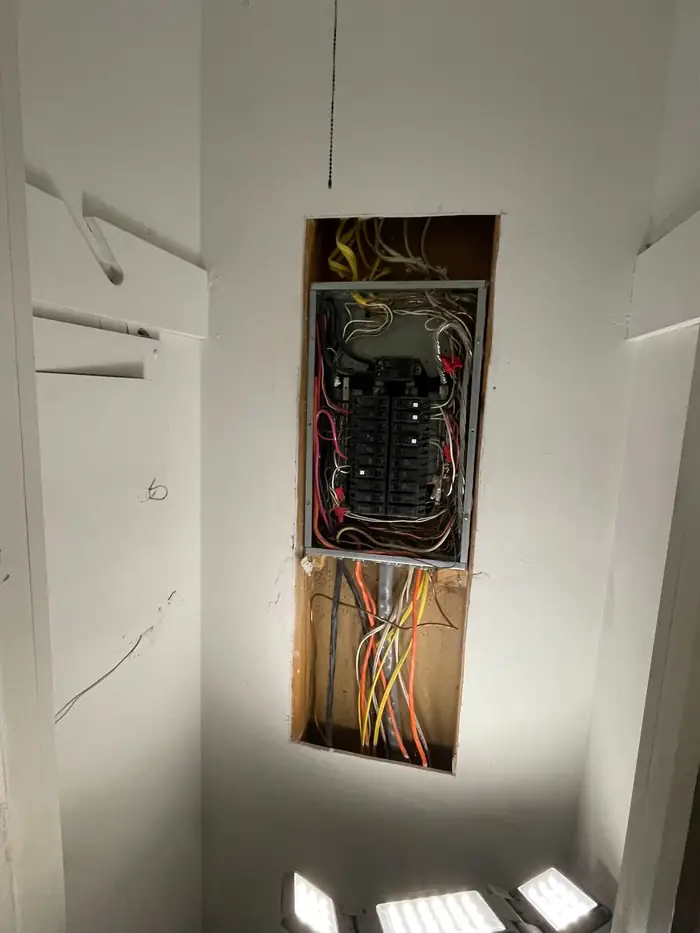
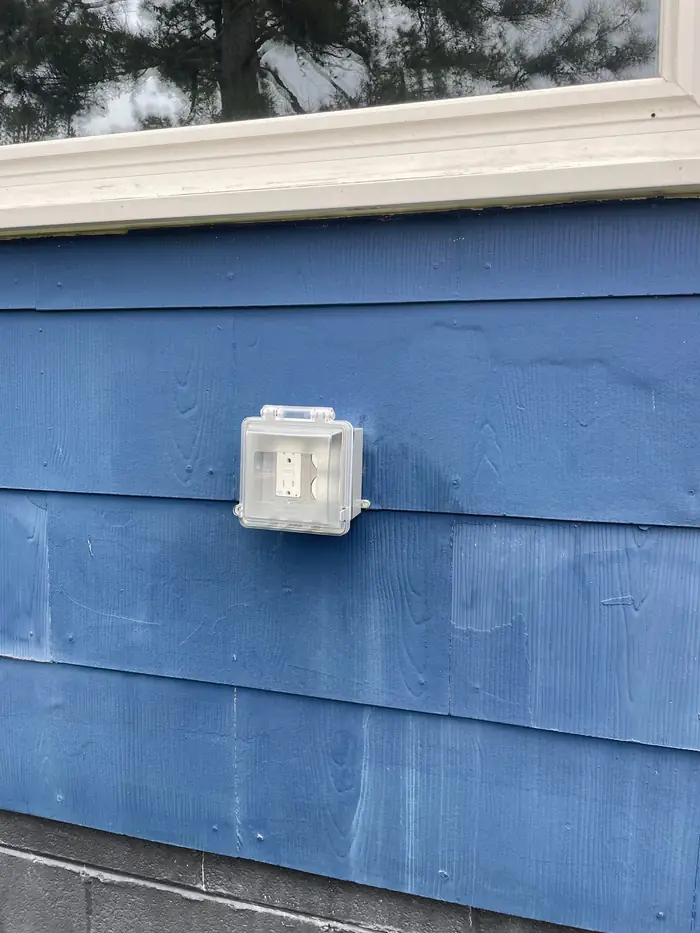
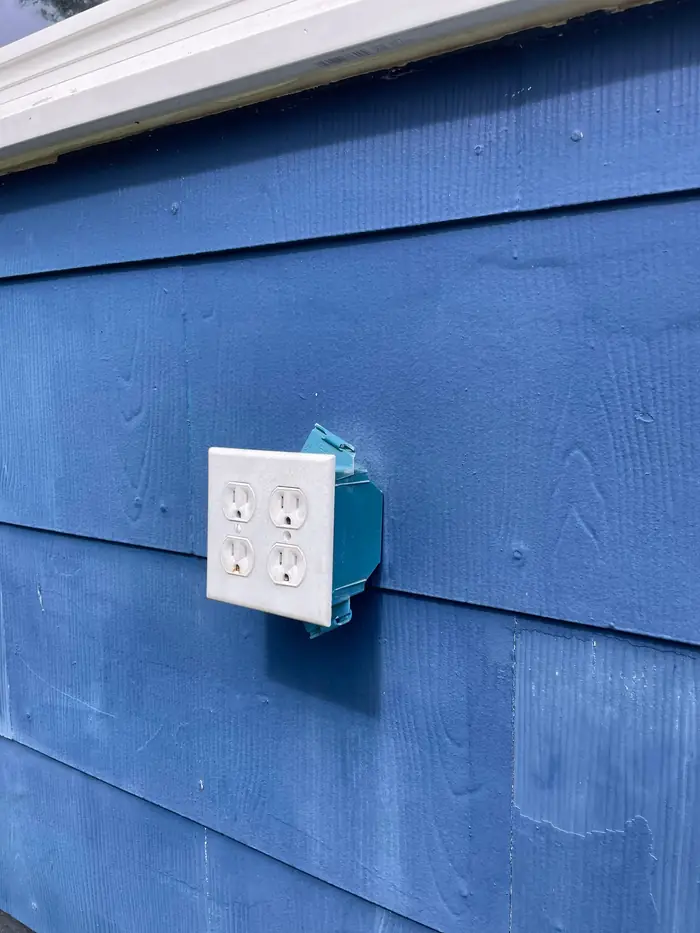
Our own photographs, taken on the job.
Often booked together
Related work
These come up alongside repairs often enough to be worth mentioning when you call.
Panel Upgrades & Breaker Box Replacement
Honest panel verdicts, Federal Pacific and Zinsco replacements, and 200-amp upgrades for houses that outgrew their service.
What's involvedElectrical Inspections & Older-Home Wiring
Pre-purchase and insurance inspections, aluminum and knob and tube answers, and rewiring scoped to what is actually wrong.
What's involvedLighting Installation
Recessed layouts planned before the saw, heavy fixtures on the right box, landscape lighting, and dimmers that behave.
What's involvedNeed repairs in Rome?
Say what is acting up, when it started, and what else was running when you noticed. That history is half the diagnosis, and a photo of the outlet or the panel fills in most of the rest.