
The box in the ceiling matters more than the fan
Ceiling fan installation in Rome, GA
A ceiling fan is a spinning fifteen to twenty pound machine hanging over the middle of a room, and the part that decides whether it stays put is the one part you cannot see from below: the box it hangs from. A standard light fixture box is rated to hold a light. It is not rated to hold something that turns and pushes against its own mounting hundreds of times a minute. Most of the wobbling, humming and slowly loosening fans we get called about trace back to a fan hung from a box that was never meant to carry one. Installing the right box is ordinary work for an electrician and nearly impossible to judge from the floor, which is exactly why it gets skipped.
When a fan needs an electrician
- A new fan for a room that has never had one, which usually means a new switch leg as well
- Replacing a fan that wobbles, hums, or has worked loose at the canopy
- A fan on a light-only box, which is the most common thing we find behind a wobble
- Adding a remote or separating the light and fan onto their own switches
- A great room or porch fan on a sloped or high ceiling that needs the right mount and downrod
- A fan outdoors, where it must be a damp-rated or wet-rated unit for the location
How we hang a fan
-
The box gets checked first
Before any fan goes up, the dead weight and the rating of what it is hanging from get verified. If the box is not fan-rated, it is replaced with one that is, braced to the framing. That is the difference between a fan that is quiet for years and one that works itself loose.
-
The wiring is sized to the controls
A fan with a light on separate switches needs the right conductors in the wall. Adding that switch leg is normal electrical work, and doing it at installation is far cheaper than opening the wall up later because the single switch turned out to be annoying.
-
Balance and test before we leave
Blades get checked, the canopy gets seated, and the fan runs on every speed before the job is done. A correctly hung fan is quiet on high. If it is not, something is wrong and it gets found then, not after we have left.
What decides a fan quote
Every quote comes after we know what is above the ceiling, because that is what decides the work.
- Whether a fan-rated box is already there or needs to be installed
- Replacement on existing wiring versus a new location that needs a switch leg run
- Ceiling height and pitch, since high and sloped ceilings change the mount and the ladder work
- Attic access above the room, which makes bracing and wiring simpler than working blind
- The fan itself, a heavy great-room fan asks more of the mounting than a bedroom fan
Send a photo of the room and the fan you have in mind and you will get a straight answer on what is involved.
Where we stop, and why
Every fan installation here is electrical work done under the owner's Georgia electrical license, which is why this work sits with an electrician rather than a general repair trade. If the job grows while the ceiling is open, a circuit that should not be shared, a box fed by wiring that has no business feeding anything, that gets said plainly with what it means, and nothing gets buried behind a canopy where you cannot see it.
How install day goes
Power to the circuit off at the panel and verified dead before anything opens
The old fan down, the box inspected, and anything not rated for a fan replaced
The new fan assembled, hung, wired, and run on every speed with the controls it came with
The room left clean and the old fan taken away if you do not want it
Ceiling Fan Installation questions
Can a ceiling fan go where a light fixture is now?
Usually, and it is the most common fan job there is. The wiring that fed the light will normally run a fan. What almost always has to change is the box itself, because a light-only box is not rated to carry a spinning fan. Swapping it for a braced, fan-rated box is part of the job, not an extra surprise.
Why does my ceiling fan wobble?
A small wobble is often blade balance, and a balancing kit sorts it. A wobble you can see across the room is usually the mounting: a loose downrod, a worn canopy, or a fan hanging from a box that was never fan-rated. That last one is worth taking seriously, because it does not get better on its own. The fix is the right box, braced to the framing.
Can you separate the fan and the light onto different switches?
Yes, when the wall has the conductors for it or we add them. Some fans also do this with a remote receiver instead, which avoids opening the wall. Which one makes sense depends on the wiring that is already there, and that is a thirty-second answer once we can see the switch box.
Do outdoor fans need anything different?
Yes. A porch fan needs at least a damp-rated fan, and anywhere rain can actually reach it needs a wet-rated one. An indoor fan outdoors rusts from the inside and fails early. The location rating is printed on the box, and it is one of the first things checked on an outdoor job.
Where we do this work
Ceiling Fan Installation across Rome, Floyd County and the towns around them in Northwest Georgia, including 6 distinct parts of Rome, from Between the Rivers to the newest streets off US 27.That is Floyd, Polk, Gordon and Bartow counties, and the towns listed below.
Town by town, that means Acworth, Adairsville, Aragon, Armuchee, Braswell, Buchanan, Calhoun, Cartersville, Cave Spring, Cedartown, Coosa, Dallas, Emerson, Euharlee, Fairmount, Hiram, Kingston, LaFayette, Lindale, Lyerly, Menlo, Plainville, Ranger, Resaca, Rockmart, Rome, Shannon, Summerville, Taylorsville, Trion and White. Each has a page on what its houses actually need, and smaller places in those counties are covered too. The full picture.
Recent work
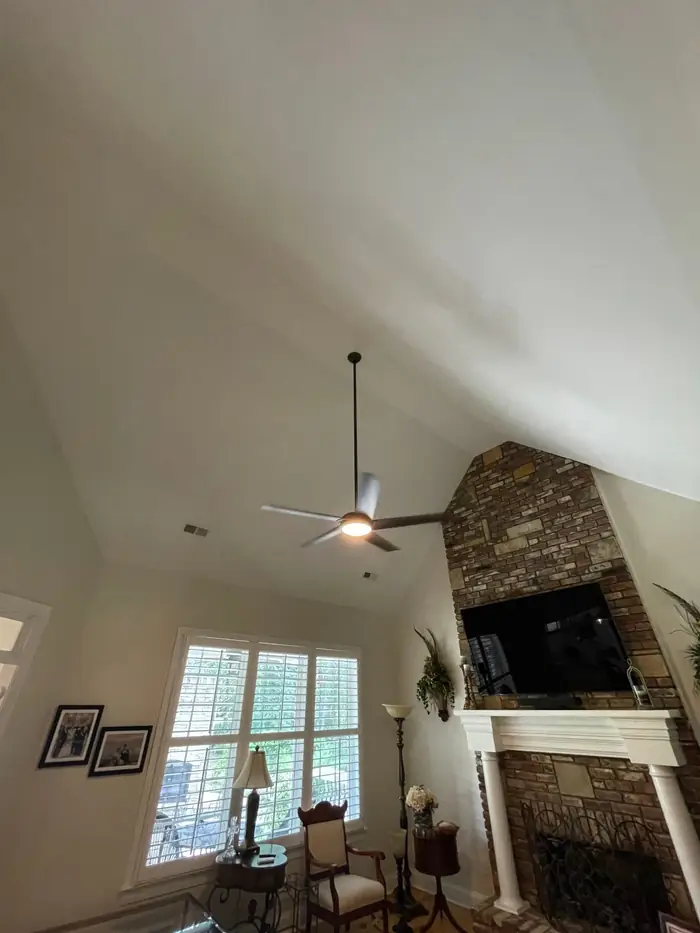
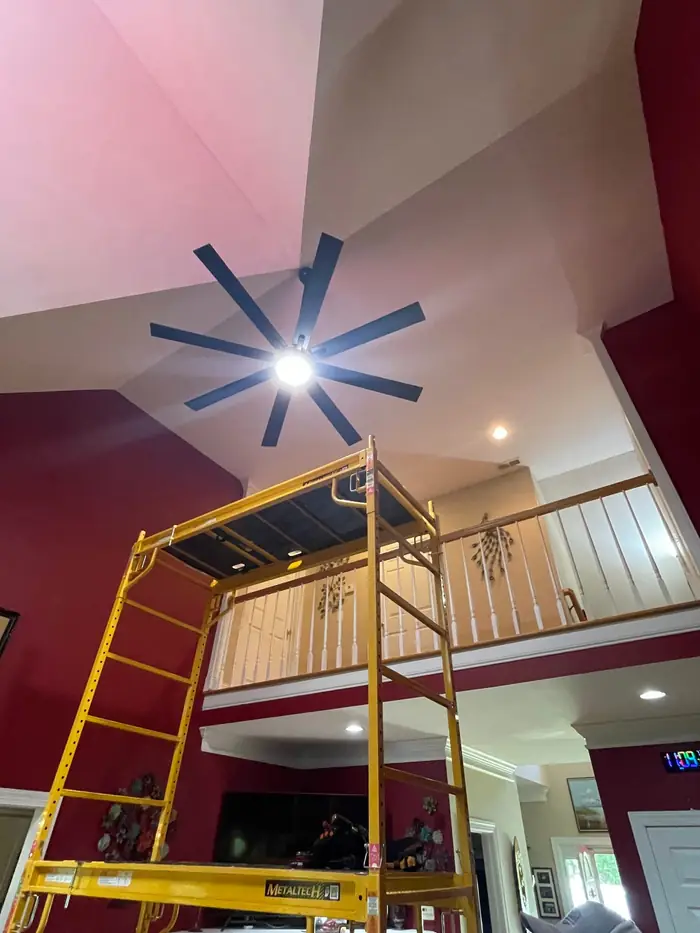
Ceiling Fans we have finished
Our own photographs, taken on the job.
Often booked together
Related work
These come up alongside ceiling fans often enough to be worth mentioning when you call.
Lighting Installation
Recessed layouts planned before the saw, heavy fixtures on the right box, landscape lighting, and dimmers that behave.
What's involvedElectrical Repair & Troubleshooting
Dead outlets, GFCI trips, flickering lights and half-dead circuits, traced to the cause instead of guessed at.
What's involvedPanel Upgrades & Breaker Box Replacement
Honest panel verdicts, Federal Pacific and Zinsco replacements, and 200-amp upgrades for houses that outgrew their service.
What's involvedNeed ceiling fans in Rome?
Say which room, whether there is a fan or a light there now, and send a photo of the ceiling if you can. That is usually enough for a straight answer.